

Why Blue Light Glasses Cost Anywhere From $15 to $250
In Australia you can buy something sold as blue light glasses for under $20 or for more than $250. The gap is not ten times the product. Here is what you are actually paying for at each tier, from a brand sitting in the middle of it.
Under $30: industrial and marketplace
Mostly two things. Either safety eyewear from an industrial supplier, which is genuinely amber and genuinely blocks a lot, or an unbranded marketplace listing where the specification is whatever the listing says it is.
The industrial option is a real answer and it deserves saying out loud. If all you want is a heavy amber filter for the evening and you do not care what it looks like, safety glasses do the optical job for a fraction of the price. What you give up is fit, finish, frame quality, any kind of design, and the ability to wear them in front of another person without comment.
The marketplace option is a lottery. No transmission data, no accountability, and the tint is often light enough that it is not really doing the thing it is named for.
$50 to $90: the honest middle
Acetate or decent plastic frames, a real specification you can check, a return policy, and a brand that can be held to what it says. This is where the actual product stops being a compromise and starts being a considered object.
This is also where we sit, at $80.
$95 to $150: the specialist tier
The established blue light brands in Australia mostly live here. You are paying for a wider range of frames, prescription options, higher review volume, and in the better cases published lab data.
Some of that premium is real. Range and prescription fitting genuinely cost money to offer. Some of it is the marketing budget that built the brand recognition that let them charge it.
Above $150: designer and claim driven
Two kinds of thing end up here. Designer frames where the eyewear is the point and the filter is a feature. And brands whose pricing rests on health claims rather than on the object.
If a $250 pair is justified by better lens performance than a $90 pair, the transmission chart will show it. Ask to see both. Frequently the charts are the same and the difference is the story.
What actually changes the cost
- Bonded tint versus surface coating. Bonding the colour through the lens material costs more to manufacture than spraying it on. It also does not wear off.
- Frame material. Acetate is cut and polished from sheet. Injection moulded plastic is not. You can feel the difference in the hand immediately.
- Range and prescription. Every extra frame and every prescription option is inventory and fitting cost. If you do not need them, you are still paying for them.
- Testing. A lab transmission report is a small fixed cost, which is why it is telling when a brand charging $150 has not paid for one.
- Marketing. The largest single variable at the top of the range, and the one nobody itemises.
What does not change with price
The physics. A deep tint blocks more than a light tint at $20 and at $250. Nobody has a proprietary way around that, and any brand implying they do is selling a story.
So the question is not which is most expensive. It is: does this lens have the tint depth for the job I want, is the specification real, and is the object worth living with.
Where we sit and why
$80. One frame, one lens, deep red, 99% of blue light blocked across 400 to 500 nm, tint bonded through the material, matte acetate, non-prescription.
We do not carry a range, so we are not charging you for one. We are not making health claims, so we are not charging for those either. 30 days, money back, which is the only guarantee worth anything in a category this noisy.
Keep reading
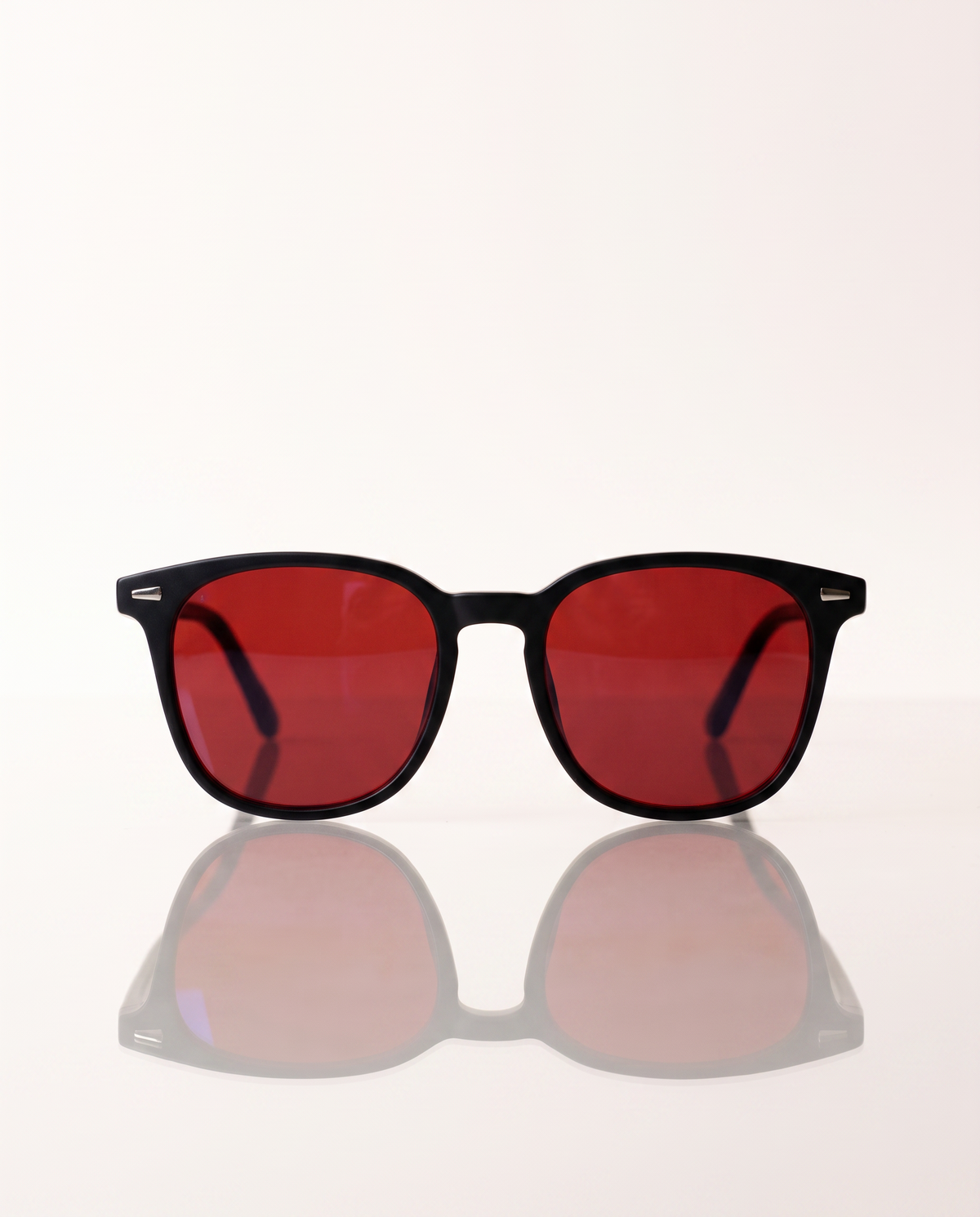
One lens. Deep red. $80.
99% of blue light blocked across 400 to 500 nm. The tint is bonded through the lens material rather than coated on the surface, so it does not wear off. Matte acetate, one size, non-prescription. Built for indoors after dark and honest about not being built for anything else.
Or get them free: subscribe to Whitening Toothpaste on the three-pack routine and a pair arrives in your welcome kit.
-
Free Shipping Australia Wide
-
Fast 3-5 Day Delivery
-
30-Day Money Back Guarantee